
BRAVE BIRD PARENTS DIVEBOMB DEADLY BLACK MAMBA TO DEFEND NEST FROM ATTACK
Share with friends
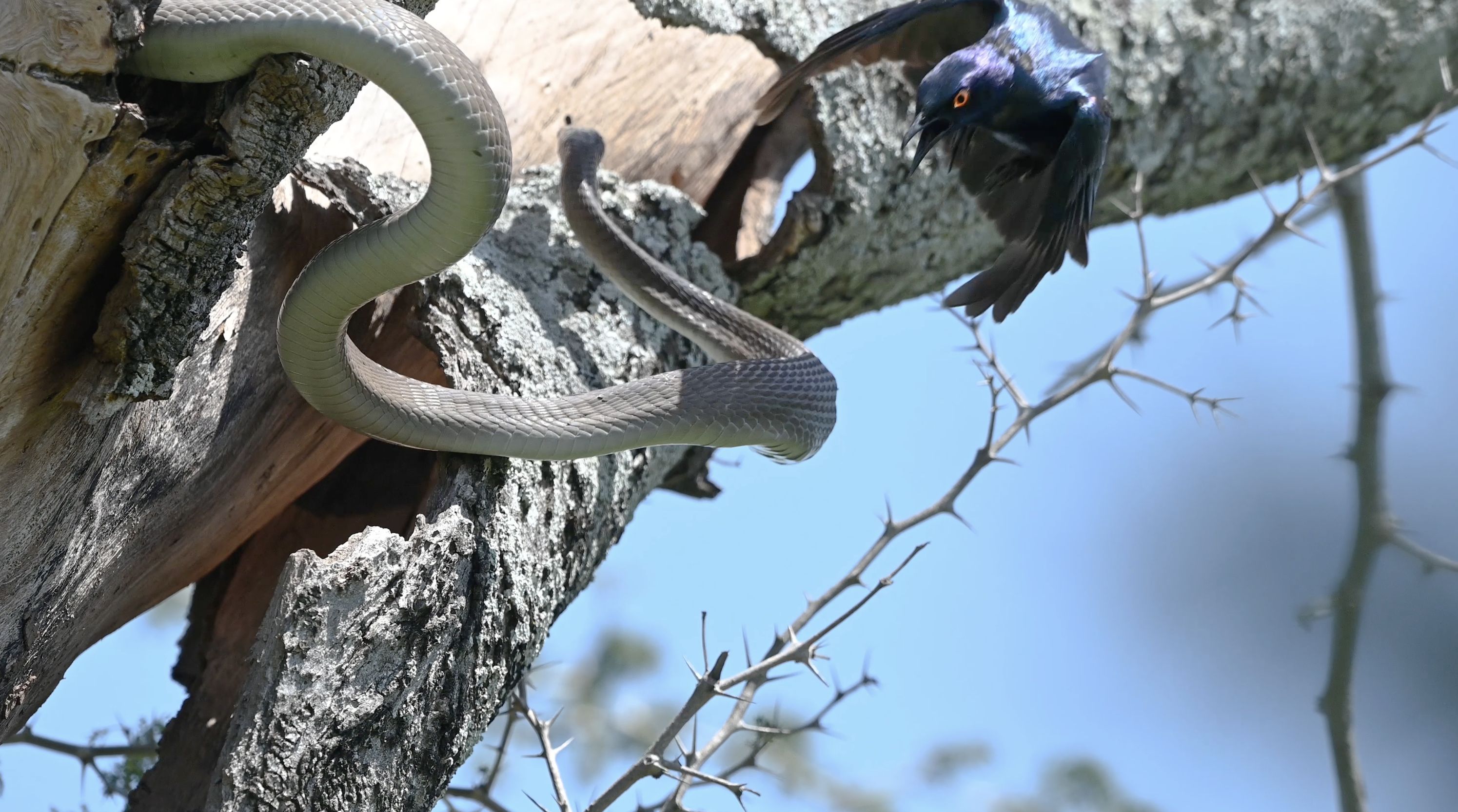
A deadly black mamba faced relentless attacks as brave bird parents repeatedly divebombed it to protect their nest.
Dave Pusey was on a tour of Blue Canyon Private Game Reserve, South Africa, when he spotted two frantic Cape starlings darting at an Ana tree.
Dramatic footage shows Africa’s most notorious snake with its head already in the trunk of the tree while the blue birds attack its body.
Despite their best efforts – even leaving marks on the snake’s body – the mamba reappeared from the tree with an obvious lump in its belly where it had clearly fed.
“The attack went on for an hour or so from when I first heard the starlings alarm calling when the snake was just underneath the nest.”
Dave Pusey
Did you know? Black Mambas

The black mamba isn’t black at all — only the inside of its mouth is 
They can outrun most humans, reaching speeds up to 20 km/h (12 mph) 
A single bite delivers enough neurotoxic venom to kill multiple adults. 
Despite its deadly reputation, the black mamba is actually a shy, evasive snake 
It’s one of the longest venomous snakes in Africa, sometimes exceeding 4.5 m
Dave said: “I was amazed at the persistence of the snake despite being so aggressively attacked and bombed by the starlings.
“My thoughts were that the snake hadn’t had a meal for a while and we had just come off a long cold winter of reptile inactivity.
“It was my first time to see a black mamba so high up a tree raiding a nest. It was very high, about 10 metres up the Ana tree trunk.
“The attack went on for an hour or so from when I first heard the starlings alarm calling when the snake was just underneath the nest.”
Learn More About: Black Mambas
Scientific Name: Dendroaspis polylepis
Other Name: Black Mamba Snake
Average Length: 2–3 m (6.5–10 ft)
Maximum Length: Up to 4.5 m (14.7 ft)
Speed: Up to 20 km/h (12 mph) — one of the world’s fastest snakes
Colouring: Grey to olive-brown
Why “Black” Mamba? Its mouth lining is jet-black
Habitat: Dry savannas, rocky hills, open woodlands
Range: Widespread across sub-Saharan Africa
Diet: Small mammals, birds, and reptiles
Venom Type: Highly potent neurotoxin
Danger Level: Can be fatal in under an hour without treatment
Temperament: Shy, alert, and fast; becomes defensive only when threatened
Lifespan: Around 11 years in the wild
Conservation Status: Not currently endangered
Enter your email address below to receive all of our new posts in your inbox!



Leave a Reply